
Project:
Task:
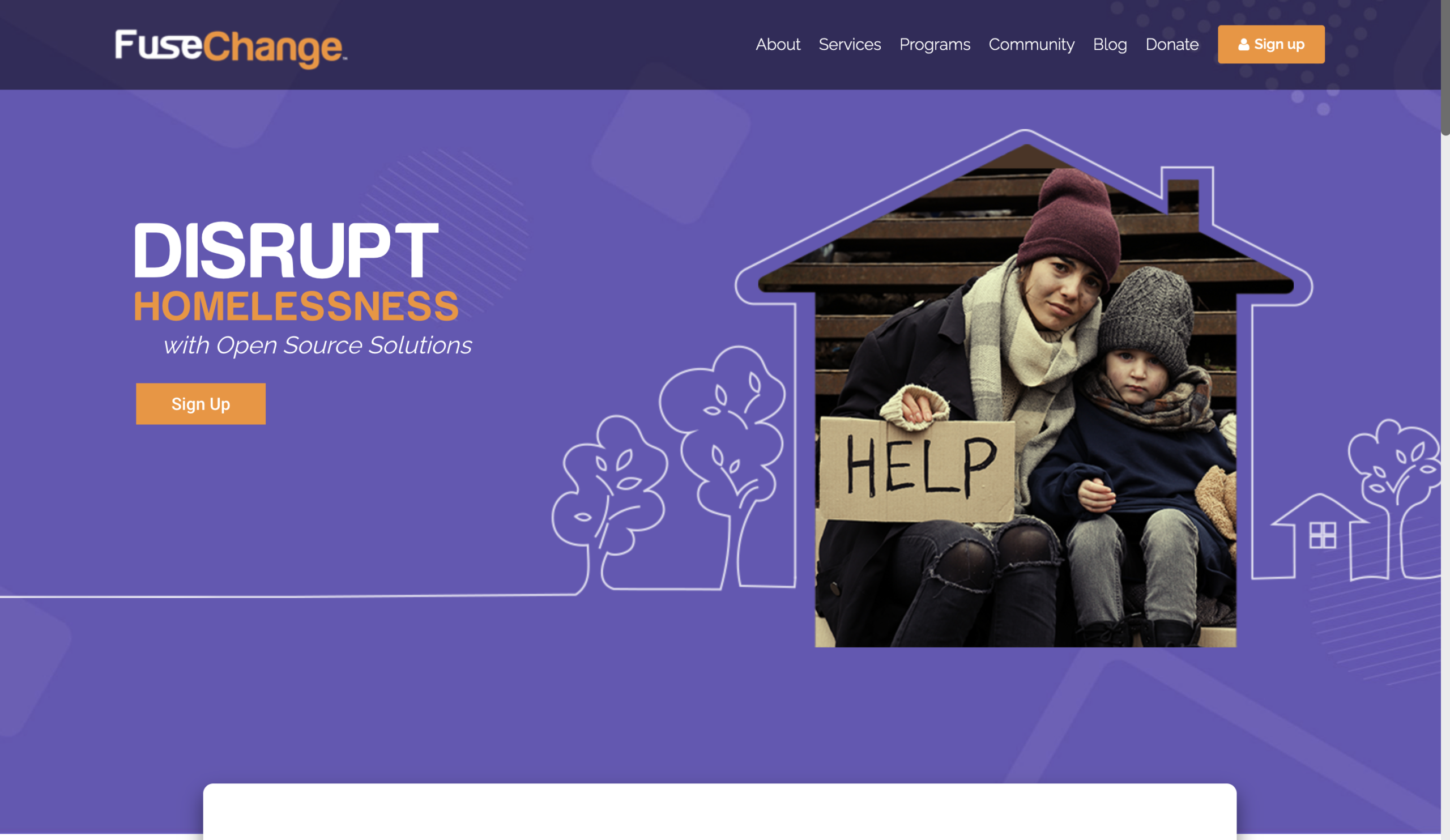
Portland, Oregon had become a focal point where homelessness was growing, yet the City’s actions remained relatively invisible to the public. Community members mostly received one-way communication, leading to countless hours of heated debates on social media and energy spent arguing the problem rather than solving it.
FuseChange was born in 2018 to harness this community energy and direct it positively toward solutions.
Problem:
Nextdoor had become a unique outlet for community frustration. In 2018, given homelessness was a growing affecting both the unhoused and the broader community. We watched as passionate, driven people debated for hours across threads hundreds of comments long. The result was spent energy that produced no meaningful solutions, only frustration.
We we did:
Ironically, the FuseChange co-founders met on Nextdoor and shared a common goal: divert negative community frustration into viable, collaborative solutions developed alongside service providers. Together, they brought decades of experience facilitating collaboration across changemakers, community groups, and organizations, along with a social enterprise technology platform built to enable collaboration across the nonprofit sector.
Solution: Cory and Sean launched FuseChange as a 501(c)(3) with a mission to inspire community members in cities across the country to create Homeless Hackathons in their own communities. The systems-level objective was to bring the Portland community together to solve local issues while collaborating with others across the country working on the same — or similar — challenges. Rather than working independently, communities could collectively coordinate across geographies and impact focus areas.
FuseChange eventually grew to over 30 volunteer organizers from around the world. They began mobilizing their cities to convene community members at Homeless Action Summits to address local challenges. Chapters formed across the United States, Canada, Romania, Australia, and Rwanda.
The pandemic ultimately paused the mission. Given the challenges of in-person gatherings, the project was placed on hold.
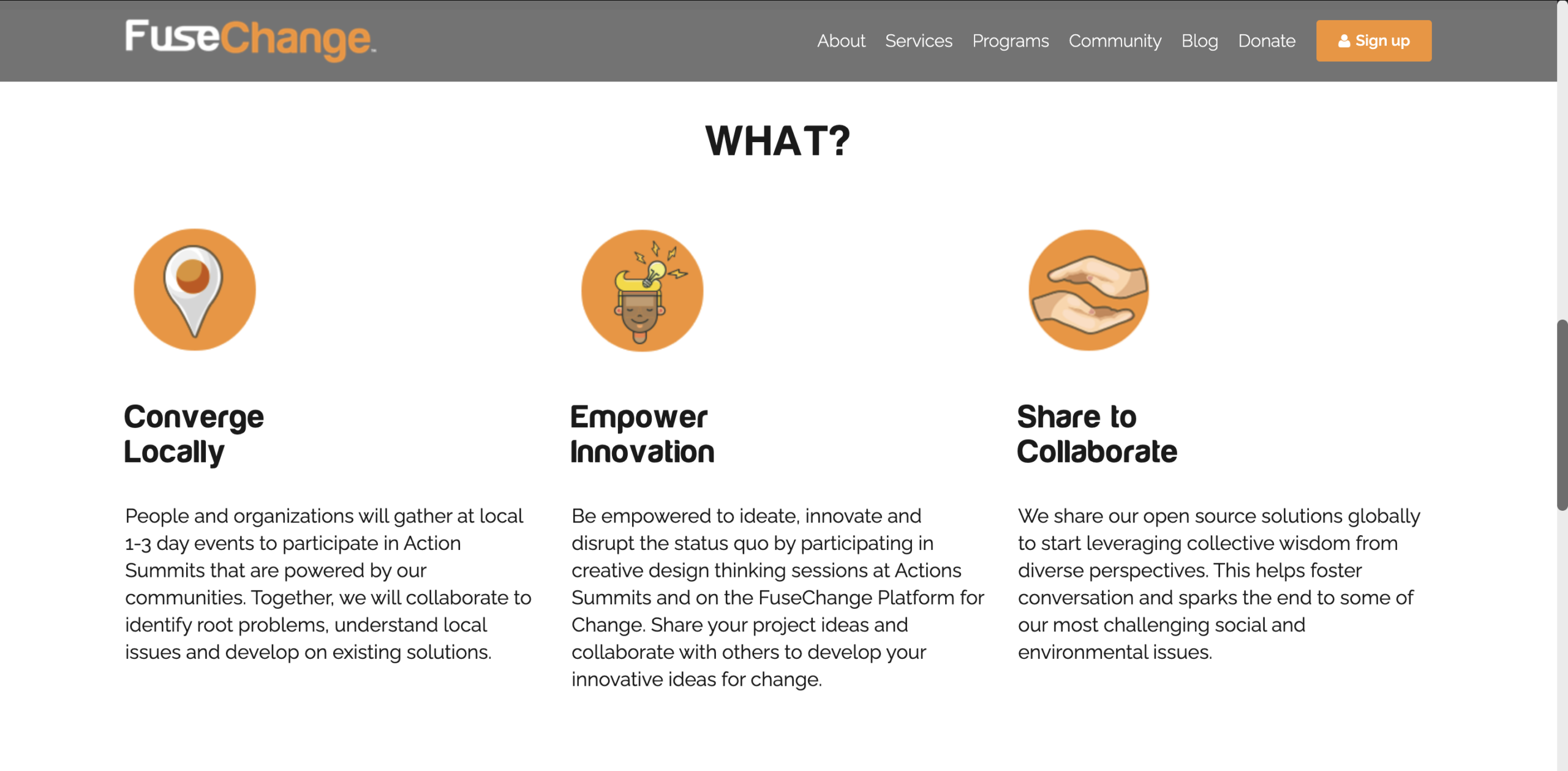
Collaboration Toolkits — Convene FuseChange provided open-source toolkits containing methods to bring people together, think through complex community problems, and collectively develop solutions applicable to local challenges. These can be thought of as facilitation techniques or design thinking strategies.
Collaborating with Open-Source Technology Many great proprietary tools exist, but none are cost-effective enough to accommodate tens of thousands of participants. As a result, FuseChange leveraged a variety of open-source tools, assembling a collaboration system that enabled participants to share what they learned in their communities alongside the solutions they were developing.
The goals of our effort:
- Capture data to weave collaborative opportunities across geographies, focus areas, and populations served.
- Enable participants to build economies of scale by pooling efforts into robust solutions that changemakers can maintain and own.
- Scale solutions more effectively by connecting initiatives working on similar problems.
Task:
Portland, Oregon became a place homeless persons and the City’s actions were not being seen by the public, mostly the community received one-way communcation. The result, countless hours of heated comunity dicussions on social media debating the problem.
FuseChange was born to harness the energy of the community and direct it positively into solutions.
Problem:
Nextdoor had become a unique place to vent frustrations in the community. In 2018, homelessness was a growing factor becoming problematic for the unhoused and the community. We watched as really smart and driven persons debate for hours, hundred of comments long for each thread. The result was spent energy that provided no further solutions to address the problems, only frustration.
FuseChange co-founders, who met on NextDoor had a similar goal to divert negative frustrations from the community into viable callaborative solutions with the service providers. We had spent decades facilitating collaboration across changemaking people, groups and organization. In addition, developed a social enterprise technology platform to enable collaboration across the nonprofit sector.
FuseChange eventually grew to over 30 persons from around the world. Organizers started to gear up their cities to convene people into Homeless Action Summits to solve local challenges. There were organizers in United States, Canada, Romania, Australia and Rwanda
The pandemic ultimately cancelled the mission at the time. Given the amount of challenges for people meeting in person, we eventually put a hold on this project.
Solution:
Cory and Sean launched FuseChange as a 501c3 with a purpose to inspire community members in cities to create a Homeless Hackathons in their own cities. Our systems-level objective was brining the Portland community together to solve our own local issues, while collaborating with others across the coutry working on the similar to, if not the exact same problems. Rather than working independently, we can collectively work across geographic areas and impact focus areas.
Collaboration Tool-kits – Convene
We provided open source took-kits containing methods to convene people and think through complex community problems and collectively to derive solutions that can address local problems. These can be thought of as hosting techniques, or design thinking strategies.
Collaborating with Open Source Technologhy
There are a lot of great propietary tools out there, however, none of them are cost-effective enough to accommodate tens of thousands of persons. As a results, FuseChange leveraged a variety of open source tools, hacking-together a collaboration system to enable participants to share what they learn in their communities and their solutions they are working on.
The goal in our effort:
- Capture the data to weave collaborative opportunities across geographies, focus areas and populations served.
- Enable participants to build economies of scales pooling efforts into a robust solution changemakers can maintain and own.
- Scale solutions more effectively connecting initiatives working on similar solutions.
Results
Provided guidance to support the district in thinking our a more inclusive and holistic solutions to support:
1. Digital record-keeping, replacing paper-based systems.
2. Enhanced communication and data sharing between the DOE, city departments, and nonprofit partners.
3. Improved coordination of social services, ensuring timely support for students.
4. Efficient tracking and utilization of McKinney-Vento Act funding.