
Program Overview
In a rural village in Rwanda, a young girl dreams of becoming a lawyer in Kigali. She excels in school, achieving top marks, but her family can’t afford to send he a boarding school. Without funds, some of the most talent youth can’t accomplish their dreams.
We believe every child deserves a chance to reach her full potential, regardless of her family’s financial situation. Our scholarship
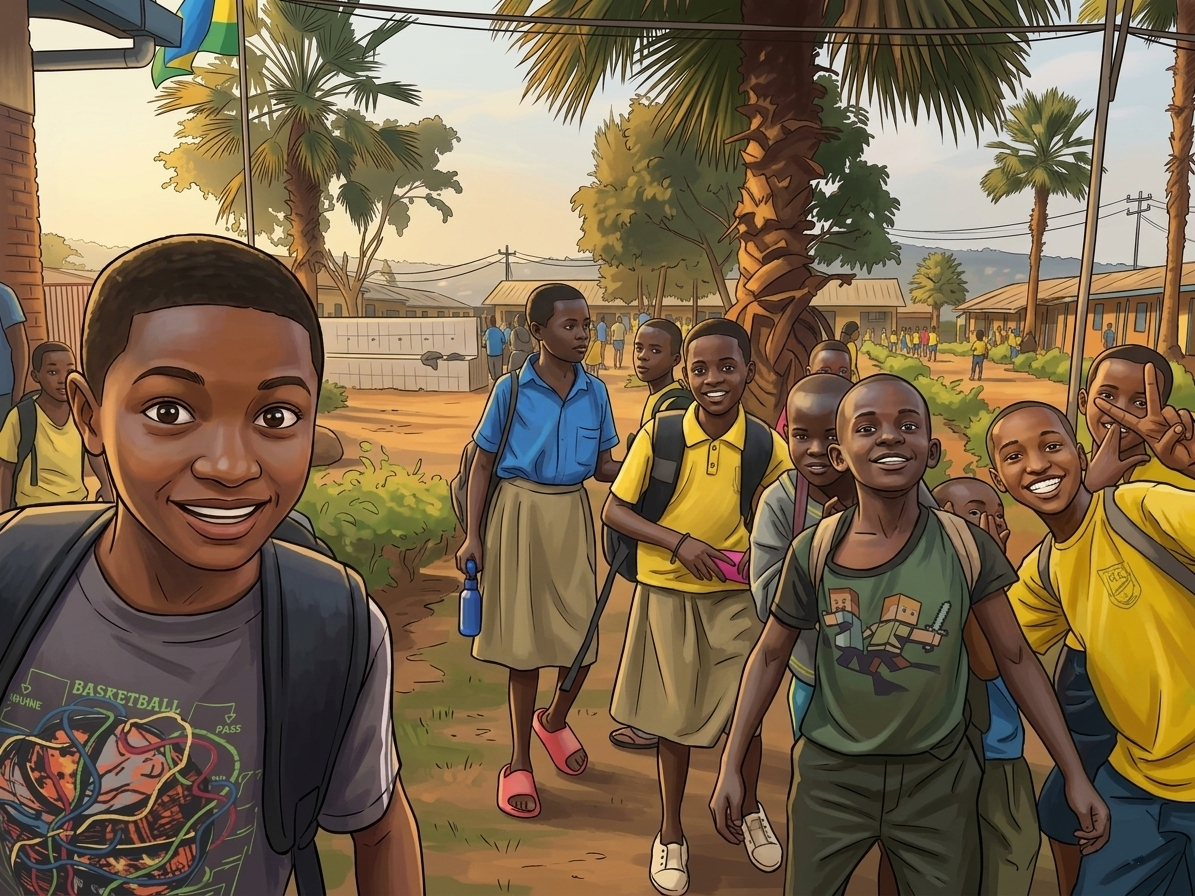
program is currently focused on creating life-changing opportunities for girls in Rwanda who have excelled academically but face financial barriers to continuing their education beyond primary school.
While 78% of girls in Rwanda complete primary education, only 38% go on to complete secondary or higher education. This is largely due to financial constraints. Our program is designed to reverse this trend and invest in the future of Rwanda, one girl at a time.
Donate
The Scholarship
The Girls Scholarship Program provides six years of full support to help students transition from secondary school through high school graduation. Scholarships are awarded to girls who:
- Score among the top in national primary school exams
- Demonstrate financial need
- Are selected in partnership with local school leaders

"Keza"
Why I am applying for this scholarship:
“Because, I want to be a high person when I finish to study and also want to help my parents from their poverty. I will be happy when I get to me objective. I will be a person who help everyone from their problem haven by them. My parents have their problem they don’t have job. So I will be happy when I help my parent from poverty. When I get to school I will work hard.”
Tell me something that makes you happy?
“Something that makes me happy is to have friend.”

"Keza"
Why I am applying for this scholarship:
“Because, I want to be a high person when I finish to study and also want to help my parents from their poverty. I will be happy when I get to me objective. I will be a person who help everyone from their problem haven by them. My parents have their problem they don’t have job. So I will be happy when I help my parent from poverty. When I get to school I will work hard.”
Tell me something that makes you happy?
“Something that makes me happy is to have friend.”

"Keza"
Why I am applying for this scholarship:
“Because, I want to be a high person when I finish to study and also want to help my parents from their poverty. I will be happy when I get to me objective. I will be a person who help everyone from their problem haven by them. My parents have their problem they don’t have job. So I will be happy when I help my parent from poverty. When I get to school I will work hard.”
Tell me something that makes you happy?
“Something that makes me happy is to have friend.”
Project Abstract
Fuse Change, girls scholarship program aims to advance girls education opportunities through provision of scholarships to students – who passed the primary school national examination with the highest scores, but are unable to attend the secondary schools due to lack of financial resources and or comes from low income families who cannot afford to send their children to a boarding school ( most of public secondary schools are boarding schools).
These schools provide a competitive academic and learning environment that propel students to excel academically, and an opportunity to reach their full potential in life.
Why the girls scholarship program: Program’s objectives:
- Provide scholarships to cover tuition fees ( paid directly to schools), school supplies, uniforms, and other related costs, ensuring that girls from low income families have the opportunity to pursue their secondary school education without the burden of financial stress.
- Reduce dropout rates: economic hardships often lead to high dropout rates among girls especially in secondary and tertiary education. ( add unesco data) according to a UNESCO report, in Rwanda, 78% of girls complete their primary schools, but only 38% complete the secondary and tertiary education levels. While there are myriad reasons for dropouts, lack of financial means contribute a significant portion to the dropouts rates.
- Promote gender equality: by specifically targeting girls, this program will continue to address the gender disparities in education access and achievement. Educated girls are more likely to advocate for their rights, break the cycle of poverty and contribute to a more equitable society, and become future leaders.
- Foster economic growth in the long run. A well educated female population is essential for economic growth. This program will contribute to human resource development, enabling girls to complete their education and contribute to a more skilled and productive workforce; to drive innovation, increase productivity and overall country’s competitiveness of Rwanda on a global scale.
What’s the impact?
We reduce dropout rates due to economic hardships that often lead to high dropout rates among girls, especially in secondary and tertiary education. 78% of girls complete their primary schools, but only 38% complete the secondary and tertiary education levels. Lack of financial means contribute a significant portion to the dropouts rates.
The goal
Promote gender equality: by specifically targeting girls, this program will continue to address the gender disparities in education access and achievement. Educated girls are more likely to advocate for their rights, break the cycle of poverty and contribute to a more equitable society, and become future leaders.
- Foster economic growth in the long run. A well educated female population is essential for economic growth. This program will contribute to human resource development, enabling girls to complete their education and contribute to a more skilled and productive workforce; to drive innovation, increase productivity and overall country’s competitiveness of Rwanda on a global scale.
Estimated costs:
According to the Ministry of Education in Rwanda, the tuition fees for secondary schools has been capped to $85 per student per term ( three months). This was an effort to ease the financial burden for low income families. However, this amount cannot be afforded by many families that earn less than $1000 per year.
| Cost Per Student | Cost per term (3 months) | Per year |
| Tution | $95 | $285 |
| School supplies (uniforms, clothes, shoes, personal hygiene products, notebooks and more). | $150 | $450 |
| Estimated annual costs | $245 | $735 |
| Estimated cost for 6 years of secondary school. | $4410 |
Program roll out:
The first cohort launched during the academic year 2024-25.
- Work with Gahanga primary school administrators three girls who passed the national examination test with the highest scores, from low income families.
- Students completed an application, including a personal statement.
- Connect with students and parents as a part of the screening process.
- Review students academic scores
In September, the program enrolled three girls from Gahanga Primary school to secondary schools. ( add girls stories and photos)
In addition to financial support, we will provide an ongoing mentorship program to support students in their academic performance and overall achievement in this journey. This includes:
- Schedule at least a monthly check in with students to learn about their progress or challenges that might impact a student’s overall performance.
- Create a network of local mentors to share their lived experiences to inspire the girls and help them to navigate their paths.
- Create a cohort meet up during summer break to learn from each other and share their experiences and dreams.
.